The price of oil has dropped sharply over the past few weeks.
Traders are once again betting the war will end soon.
This is a dangerous assumption.
We’ve written from the beginning of the war that it wouldn’t end quickly and that the US would struggle to win, despite being able to inflict enormous damage on Iran and its economy. That forecast is proving accurate.
Viewed from Iran’s perspective, there’s been no regime change. Iran retains a substantial stockpile of highly enriched uranium, and the regime continues to resist US attacks.
Scores of top Iranian religious, military, and political figures have been killed. But the result is personnel change, not regime change. The Iranian Revolutionary Guard Corps (IRGC), with a figurehead ayatollah, is still in charge.
Trump has claimed over and over that the war would be done “in a few days” or “a few weeks,” but those claims proved hollow, and Trump’s credibility on the issue is dropping.
There was a “ceasefire” in April, a “Memorandum of Understanding” in June, and a string of negotiations, but none of it lasted.
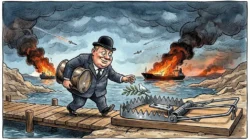
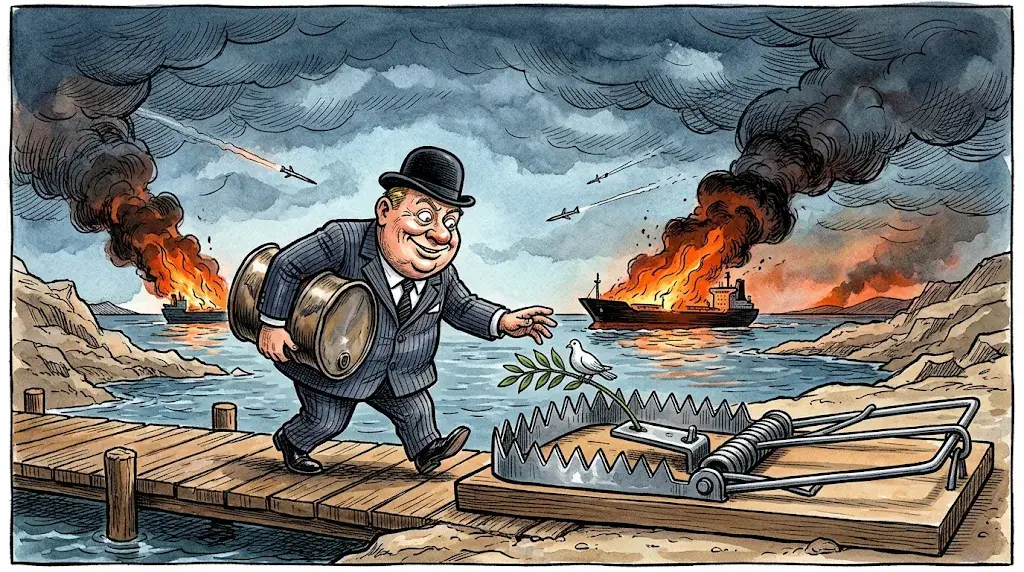
There are negotiations currently underway through Qatar between Iran and the US, but the sides are still far apart. I don’t expect that to change. Both sides are playing for time to rest, rearm, and prepare to resume the fighting.
Major military action may likely resume in a few days, now that the US midterm elections are over and Israel’s parliamentary elections are done as well.
Britain’s Investment Letter Since 1938
In 1938, The Fleet Street Letter warned its readers that war was coming to Europe — and even identified September as the critical month.
Since then, its readers have been warned ahead of Black Monday, the dotcom crash and the 2008 financial crisis.
Today, Britain’s longest-running investment advisory is still looking for the “news behind the news” — and the investment opportunities others could be missing.
Click here to discover what The Fleet Street Letter sees coming next.
Capital at risk.
What Does Britain’s Oldest Investment Letter See Coming Next?
It warned readers ahead of Black Monday.
The dotcom crash.
And the 2008 financial crisis.
Now, nearly 90 years after it was founded, The Fleet Street Letter is still searching for the “news behind the news” — and the investment opportunities that could emerge from the next major turning point.
Click here to discover what its editors are seeing now.
Capital at risk.
An unwinnable war
US failure to win the war doesn’t mean Iran has achieved a major victory.
Iran can’t win the war either… except in the sense of the regime hanging on and continuing to block the Strait of Hormuz. Nor can the US win either. Bombing blows things up but doesn’t win the war by itself.
The US won’t agree to Iran’s terms involving reparations and withdrawal from the Middle East.
Iran also insists that it will control the Strait of Hormuz going forward, with vessels seeking transit subject to Iranian permission and restrictions.
Iran has also sought to impose transit fees based on vessel size and cargo, while reserving the right to waive those fees at its discretion, obviously beginning with its own oil export cargoes.
The US will not agree to any of this.
Iran won’t agree to US terms, including the elimination of its nuclear enrichment facilities and surrender of its highly enriched uranium stockpiles.
The US also wants an end to Iranian support for Hezbollah in Lebanon, the Houthis in Yemen at the entrance to the Red Sea, and Hamas in Gaza. Iran will never agree to these terms.
Iran depends on the so-called Shia Crescent that runs from the Strait of Hormuz through Tehran, Iraq, Syria, and Lebanon to exert regional influence and keep Israel continually on the defensive.
With neither side coming close to agreeing to the other side’s terms, this war could just drag on with no end in sight.
The war’s economic kill chain
Of course, the impact of this war goes far beyond the battlespace.
Prices for oil, liquefied natural gas, nitrates, sulphur, and distillate products such as petrol, diesel, and kerosene (jet fuel) have risen sharply. This has led to inflation not only in energy costs and home heating but also in a large variety of consumer goods.
Everything you buy moves by lorry, either to your door, a distribution centre, or a shop. When the cost of diesel goes up, the cost of everything on the lorry goes up with it.
This dynamic won’t change soon.
In fact, matters could soon get worse.
Sovereign petroleum reserves, natural gas reserves, fertiliser, and chemical stockpiles have all been drawn down since the war began.
Those stockpiles are one reason prices have not gone even higher and shortages haven’t been more severe.
But now that grace period based on reserves is running out. Many stockpiles are depleted, and further shortages and price spikes may not be far behind.
This supply disruption will likely play out in inflation, which in turn could drive interest rates higher.
For UK households, higher global energy prices could mean rising petrol costs, household energy bills, and prices for imported goods.
Persistent inflation could also make it harder for the Bank of England to cut interest rates, keeping pressure on mortgage holders, businesses, and consumers.
Those higher interest rates affect mortgages, credit cards, and other forms of consumer debt.
They also add to the cost of servicing the US national debt as the US Treasury has to refinance maturing debt at progressively higher rates.
Even the AI infrastructure boom could slow as hyperscalers face higher interest rates on the enormous borrowings and financing commitments they are undertaking to pay for new data centre construction.
The process feeds on itself, with supply shortages, higher costs, higher interest rates, slowing investment, and ultimately a market crash and recession.
But before the crash and recession, investors will have to endure inflation.
The bad news comes in stages, but it’s almost all bad news because of the war.
|
Iran’s next targets: Oil, power, and water
From my point of view, Iran is another “forever war” and looks more and more like Vietnam as the months drag on.
The regime continues to strike oil tankers in the Strait of Hormuz with anti-ship missiles and drones.
If the war restarts at full scale, the Iranian battle plans have been well advertised. When the US begins its new attack, Iran probably won’t remain passive.
Iranian officials have threatened attacks across the Persian Gulf, warning that nothing is off limits. That means they could attack pipelines, refineries, oil fields, electricity-generating stations, ports, and desalination plants.
This presages a humanitarian crisis as Gulf populations dependent on desalination could face severe water shortages within days if critical facilities are disabled.
The headlines will shout about election stories for weeks to come. But the real story is what’s going on in Iran.
Get ready for more fireworks and higher prices for petrol, diesel, and everything else as far as the eye can see.
Best,
Jim Rickards
Contributing Editor, Investor’s Daily
PS While war in the Middle East threatens to send oil prices soaring, Britain could be sitting on an extraordinary opportunity of its own. An estimated 511 billion barrels of oil have reportedly been identified beneath British waters, potentially worth £45 trillion at current prices. And Sam Volkering has identified one company that could stand to benefit if the oil is commercially recoverable and drilling goes ahead. Click here to discover the ticker symbol for free.