 In today’s issue:
- Why commodity prices are soaring
- Resource nationalism precedes war
- President Trump’s plan for hegemony
Commodity investors are used to political risk. Every now and then an African president sends a chopper to steal a miner’s gold. Or royalty rates have to be “renegotiated” with the new leader of a South American country.
But lately, things are getting a little out of hand.
Countries presumed to be stable jurisdictions are pulling the rug out from under hugely valuable projects, companies, and trading relationships. It’s as if someone rewrote the rules halfway through a board game.
China keeps announcing various export restrictions on its rare earth metals. Most recently to Japan, but that’s only the latest example.
China also spiked the Nickel price on suspicions of hoarding.
Donald Trump’s Venezuelan oil deal is downright wild. And Iran might be next. Not to mention a very appealing amount of mineralisation in Greenland.
If America can behave like this, who else will?
Copper prices hit fresh record highs – with three-month futures on the London Metal Exchange topping about $13,387 per tonne – over worries about potential tariffs and ongoing supply-chain disruptions.
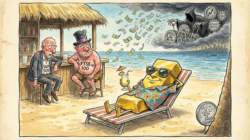
Gold prices keep surging at an unhealthy pace – heading back to the $4,500 mark after breaching it on Boxing Day – thanks to central bank buying. The big wigs added about 45 tonnes of gold to their national reserves in November 2025 alone.
That’s about 15% of the gold the world produces in an average month.
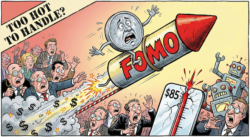
Silver has surged at an unhealthy pace. It peaked at $80.53 on 6 January.
My investment research service, Strategic Energy Alert subscribers have watched the two silver stocks we hold in the model portfolio rise into triple digit territory. One is currently showing 188% open gains. The other 159% open gains. (Past performance is not a reliable indicator of future results).
And from emails readers have sent me, some have banked a bunch of those gains while others are holding on for more ahead.
Gas markets are awash with a glut that’d make a Russian blush. US output is running at record seasonal highs of about 107 billion cubic feet per day… storage sits above normal levels… and global LNG (liquid natural gas) capacity is expected to jump by about 42% by 2030.
And an extraordinary amount of oil is being shipped in defiance of sanctions. Globally, there are about 1.4 billion barrels floating on tankers. That’s well above typical levels.
What’s going on?
Why does nobody care about how things are supposed to work anymore?
Well, you’d best listen to an explanation from a man who predicted it all. Now he’s helping his subscribers profit from the trend.
If Jim Rickards is right, this is only just the beginning for commodity markets.
Unfortunately, it’s also the beginning of something else…
Resource nationalism precedes wars
My three children get along well for the most part.
But when the question of “whose it is” comes up, carnage ensues instantly.
It needn’t be a toy, either. Any object will do. Even declaring the intention to sit next to someone can kick things off. Or who gets to turn off the TV or hang up the phone.
The point is that once one person declares a right to something which is by its very nature exclusive, the others respond with rapid escalation.
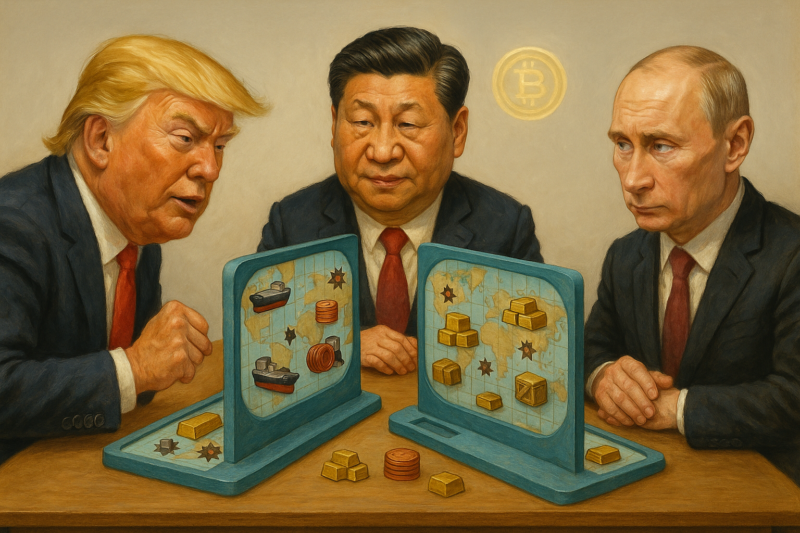
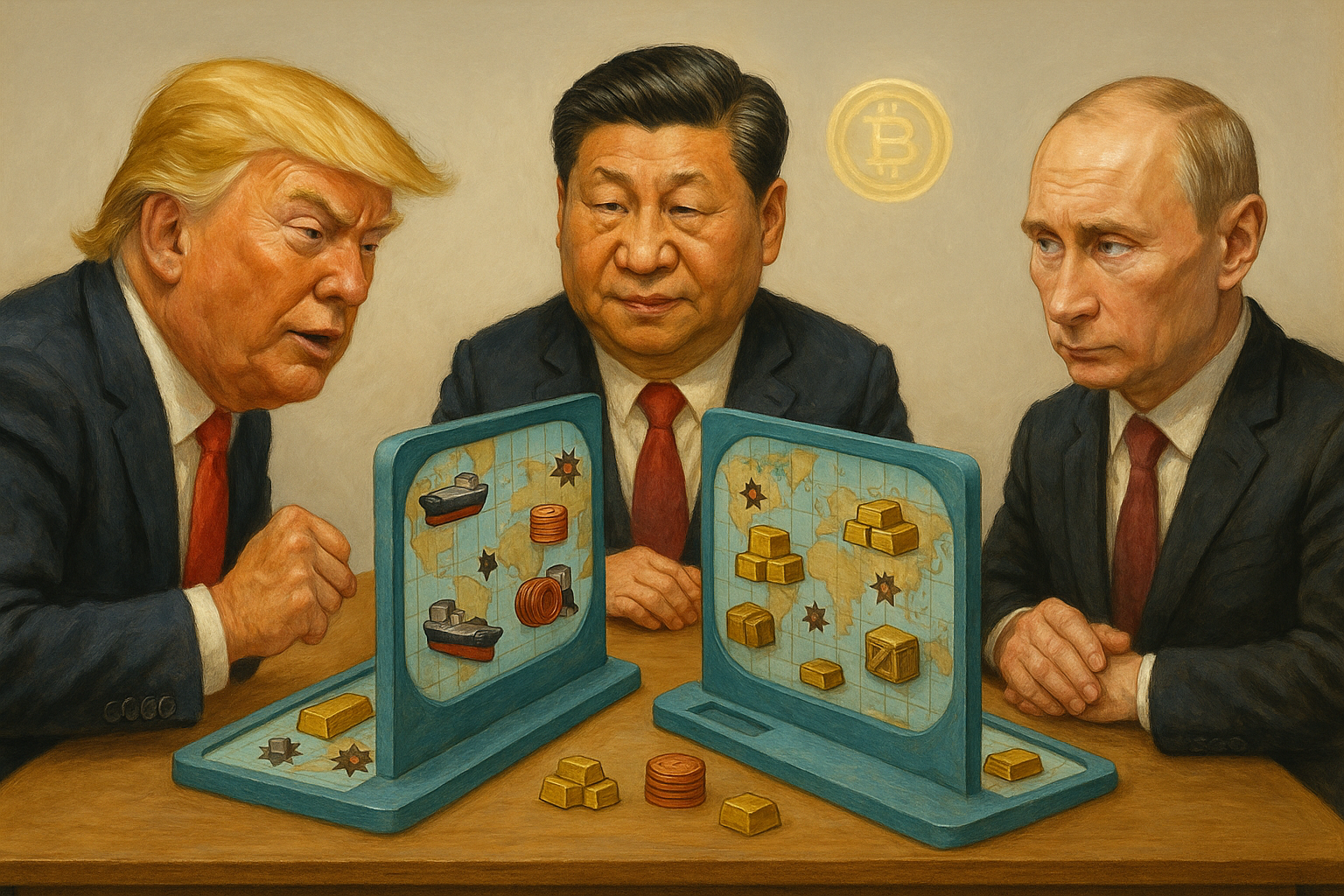
I hate to say it, but my children are behaving like Russian Vladimir Putin, Trump, and China’s Xi Jinping. I can even tell you which one is which, but let’s not go there…
Leaders are screaming “mine” over commodities, energy resources, refining capacity, and even entire countries.
This sort of thing was supposed to be off limits. But here we are…
It’s remarkably like the days of empires challenging each other over ownership of “possessions.”
As some would tell the story, the Germans and Japanese were merely trying to emulate the British and Spanish empires that preceded them… except with a ruthless efficiency only those cultures are capable of.
My point is that resource nationalism gives a reason for war.
It assigns economic value to land and resources instead of industrial might.
Territory and access to minerals begins to matter.
But, unlike productive capacity, resources are exclusive by nature. You either have them or you don’t.
Since the days of empires, we’ve learned that it’s productivity that makes people prosperous. Some of the wealthiest places on earth have notably few resources and a lack of land. Singapore’s probably the best example of this.
But it seems we’ve forgotten that lesson. We’re back to taking other people’s stuff to get rich.
Trump’s comment that the US’ enemies may no longer access Latin American energy resources is only an escalation in this conflict.
China’s Belt and Road Initiative staked a similar claim. And countless other policies preceded that.
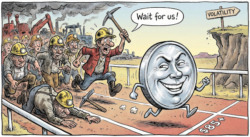
At a time like this, governments themselves, not just companies, are bidding for resources. That promises an extraordinary bull market. You literally have the might of China and America fighting over scarce assets.
No wonder the price is going up
Who will win the scramble for resources?
The answer to that question lies in a very strange place indeed.
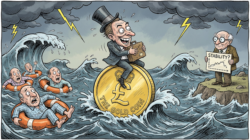
Our current global monetary system rests on the presumption that it won’t be weaponised.
Trade is conducted in US dollars because people can trust the US dollar. The currency’s value is the US government’s respect for property rights and the efficiency of payment institutions like SWIFT.
Now all that is ending.
By responding to the resource nationalism of China and Russia, the US has declared that the monetary system is a weapon after all.
Russia and China are scrambling to establish alternatives. That’s why they’re buying gold, launching their own commodity markets, and trying to encourage trade that doesn’t use the US dollar.
The trouble is that those systems aren’t ideal either. The US is still more trustworthy than most.
Now that we’ve had a few rounds of escalation between the major economic powers when it comes to resource nationalism, sanctions, and trade wars, the question is what happens next.
Policies that were considered too drastic are now on the table. Things like kidnapping leaders and bombing nuclear sites…
But I suspect the US will launch an attack of a very peculiar sort.
One that has never been used before.
One that will establish a replacement for the current global monetary system.
My old friend Jasmine Birtles of MoneyMagpie asked me to explain the details in this interview… Watch it.

Until next time,

Nick Hubble
Editor at Large, Investor’s Daily