|
Editor’s Note Over the next week, I’m going to share with you a particular strategy that many famous billionaires have used in some shape or form on their road to riches. It’s a strategy that Sean Allison of Reliable Trading Circle fame has mastered. He calls it The $0 Trade Loophole… and it’s the ultimate risk reversal approach that should be in any serious investor’s arsenal. Sean is hosting a special event on Wednesday, September 16 to discuss this strategy. It’s free to attend. Sign up here so we can send you a few extra notes on this strategy, and remind you when it airs. |
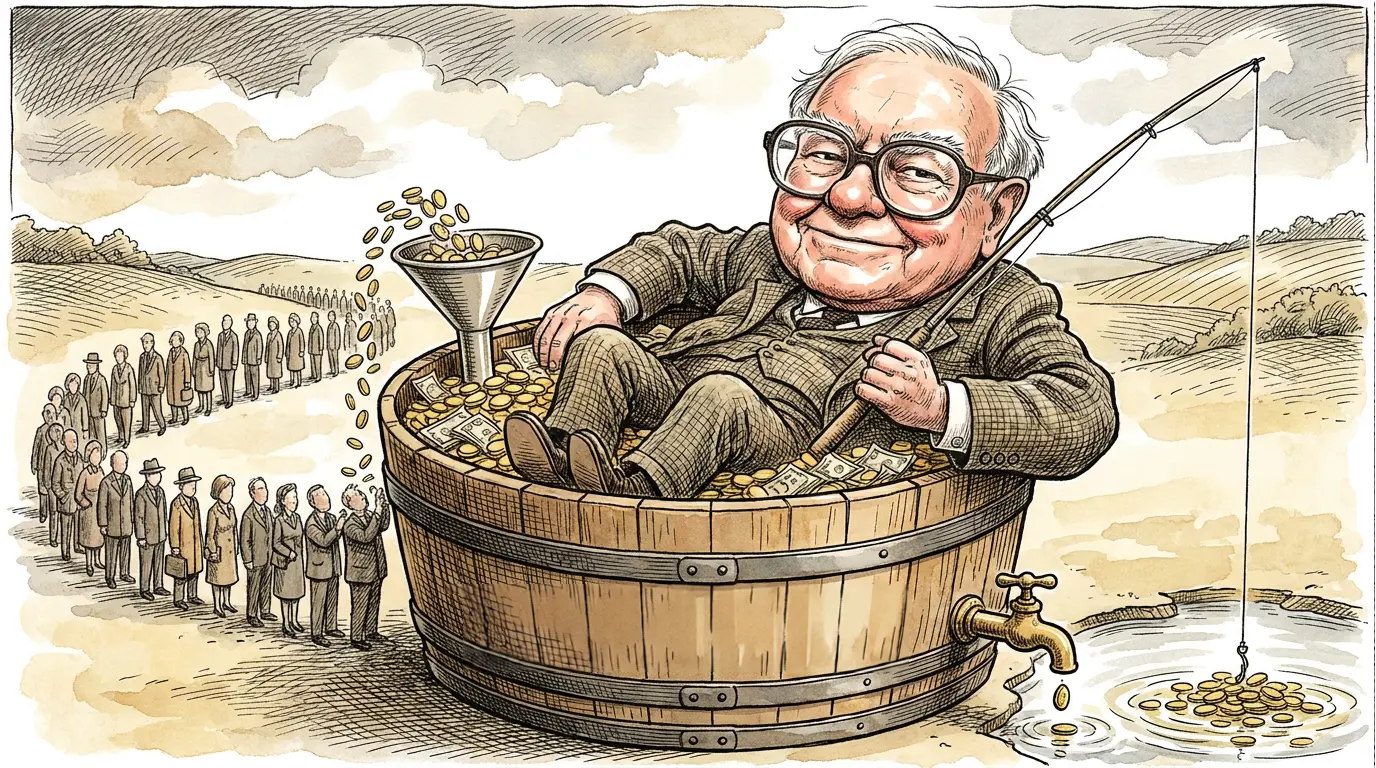 In March 1967, Warren Buffett paid $8.6 million for an Omaha insurance company called National Indemnity.
At the time, Berkshire Hathaway was still predominantly a struggling textile business.
The insurance company wasn’t.
National Indemnity had been built by an eccentric Nebraskan named Jack Ringwalt, who had made a business out of insuring risks other companies didn’t particularly want.
Buffett had known Ringwalt for years. So he knew Ringwalt didn’t want to sell his business.
Buffett waited.
Then, one Saturday morning, the phone rang.
Ringwalt was finally ready to talk.
Buffett moved quickly, buying National Indemnity and another small insurer for $8.6 million.
It probably didn’t look like one of the great investments in financial history at the time.
It wasn’t Coca-Cola or Apple. It was an insurance company in Omaha.
But that acquisition helped transform Berkshire Hathaway, giving Buffett access to one of the most powerful wealth-building mechanisms of his career.
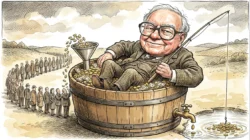
Access to other people’s money.
Let me explain.
Forget AI, America’s No.1 forecaster says a bigger boom is coming: He predicted the Financial Crash, both Trump victories and 2025’s record rare metals surge that saw stocks soar as much as 645% Now discover the move he is making as America seeks to unlock a home grown fortune potentially worth trillions on Friday, May 15th Find out what that move is right here >> Capital at risk“I’ve invested $1 million of my own money to prepare for this…”
The money that arrives first
Insurance is an unusual business. You pay your car insurance today. But your insurer may not have to pay your claim for months.
Some forms of insurance can involve an even longer gap between collecting the premium and paying the eventual claim.
During that time, the insurer holds the money.
It’s called float.
Buffett once described it as money Berkshire holds but doesn’t own.
And critically, while Berkshire holds it, it can invest it.
That distinction became enormously important in Buffett’s successes.
Berkshire’s insurance float was about $20 million in 1967. Thirty years later, it had grown to more than $7 billion.
By then, GEICO and Berkshire’s other insurance businesses were generating billions more.
But the size of the float is only half the story.
The extraordinary part was what Buffett sometimes paid to get that float: nothing.
Actually, less than nothing.
At Berkshire’s 1998 annual meeting, Buffett was asked why he’d previously suggested that $7 billion of insurance float could be more valuable to Berkshire than $7 billion of shareholders’ equity.
His answer was remarkable.
The float, he explained, had come to Berkshire at a negative cost.
In other words, Berkshire wasn’t merely borrowing billions cheaply. At times, its insurance operations were making an underwriting profit while simultaneously providing Berkshire with billions of dollars it could invest.
As Buffett said, “It comes to us with a profit attached.”
Think about that for a moment…
Most of us invest money we’ve already earned.
We work.
We save.
Then we invest what’s left.
Buffett did it differently. Customers handed Berkshire money and Berkshire accepted an obligation in return: it would pay legitimate insurance claims when they arose.
But until those claims had to be paid, Buffett could use the money.
And when Berkshire priced that insurance risk correctly, the company could actually be paid for the privilege.
That’s an astonishing funding model.
And Buffett knew exactly how valuable it was.
The other half of Buffett’s genius
Ask anyone why Buffett became one of the richest men in history and most would answer it’s because he bought good businesses at attractive prices and held them for a long time.
That’s true… but it’s incomplete.
Buffett didn’t merely become exceptionally good at deciding what to own. He also became exceptionally good at thinking about how ownership was funded.
In Berkshire’s 1995 annual letter, Buffett explained that profitability comes down to three things:
- What your assets earn
- What your liabilities cost
- How much leverage you employ
In more years than not, Buffett said Berkshire’s cost of insurance funds had been “less than nothing.”
Per the Oracle of Omaha…
This access to “free” money has boosted Berkshire’s performance in a major way.
But there’s an important catch: Insurance float isn’t truly free money.
Hurricanes happen. Cars crash. Buildings burn.
If an insurer gets the maths wrong, the supposedly cheap money can become extraordinarily expensive.
Buffett knew this first hand.
In 2001, for example, Berkshire’s cost of float shot up to 12.8%, partly because of losses associated with the September 11 attacks.
Buffett’s “golden ticket” was understanding the risk, and being willing to pay for it when others wouldn’t.
This strategy works in investing too
The good news is you don’t need to own an insurance company to encounter the same basic economic principle in financial markets.
There are investors who are nervous about shares they own. They’re willing to pay someone else to accept a very specific risk.
That means there are circumstances in which you can get paid for agreeing to buy shares in a company you already want to own – at a price lower than they’re trading for today.
Think about that.
You’ve found a company you like.
It’s trading at £50.
You’d love to own it at £40.
Normally, you’d put it on a watchlist and hope the price falls.
But there could be investors willing to pay you today for agreeing to buy it if it reaches £40.
This is where things get interesting.
Instead of simply paying to invest, you’re asking whether there’s a risk you’re comfortable accepting that somebody else will pay you to take.
And, perhaps more importantly, what could you do with the money they paid you?
We’ll come back to that.
In the meantime, we’re gearing up to share how you can make this exact same strategy a part of your investing arsenal. We introduced Sean Allison from Reliable Trading Circle to you in 2025.
Recently, I was chatting to him about Warren Buffett’s strategy and he said that he’s putting the finishing touches on a presentation showing you how to make this exact same strategy – what he calls “The $0 Trade Loophole” – a part of your investing arsenal.
This is free to attend, but I encourage you to sign up here. We’ll share a few extra details with those who are signed up between now and then… and send you a reminder before the event starts.
Until next time,
Elizabeth Cox
Associate Publisher, Southbank Research