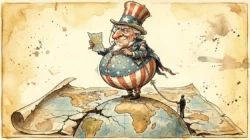

Publisher’s Note: Energy prices are rising again. Conflict in the Middle East continues to threaten one of the world’s most important trade routes. And markets are reacting not to earnings or fundamentals, but to a growing sense that the global system is becoming more fragile by the day.
In the UK, we are heavily exposed to imported energy, global trade flows, and policy decisions made both at home and abroad.
When oil spikes, when shipping routes come under pressure, when central banks feel compelled to act — the effects tend to show up quickly here, whether through inflation, currency moves, or shifts in market sentiment.
But what matters most isn’t the volatility itself. It’s what sits beneath it.
Energy is no longer just an input — it’s a strategic lever.
Trade is no longer purely economic — it’s increasingly political.
Central banks, still shaped by the inflation shock of 2022, risk responding in ways that could amplify the problem rather than solve it (as Fleet Street Letter editor Nick Hubble explained last week).
At the same time, structural forces continue to move forward. Capital is still flowing into AI infrastructure. Supply chains are being redrawn around resilience rather than efficiency. The scramble for critical resources is accelerating.
That combination — short-term disruption layered on top of long-term transformation — is what’s driving markets right now.
That’s why today’s essay matters.
Because as you’ll see, the current energy shock isn’t just pushing oil higher —
Here is the Energy Information Administration (EIA) oil price forecast from February 2026:
We estimate that oil-directed rig activity in the Permian will be relatively low as West Texas Intermediate prices fall from $65/b in 2025 to average $53/b in 2026 and then average $49/b in 2027.
According to the EIA, West Texas Intermediate (WTI) should be around $53 per barrel on average this year.
Hmm.
Here’s the current oil price chart for WTI:
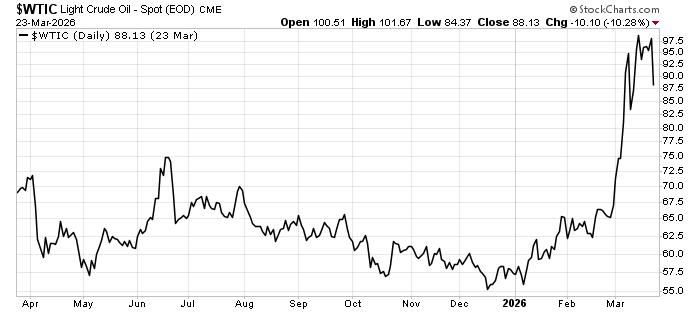
Not quite where it’s “supposed” to be.
The Iran war has pushed the oil price from less than $60 per barrel to over $90. That’s a 50% jump in a few weeks. This is the highest price we’ve seen since 2022.
There’s an opportunity for investors inside this oil spike.
The higher oil price drove petrol prices higher. But, oil price isn’t the only driver of petrol. The explosion at Valero’s (VLO) giant Port Arthur oil refinery could send gas prices even higher. Port Arthur is the largest refinery in the US and the eighth largest in the world.
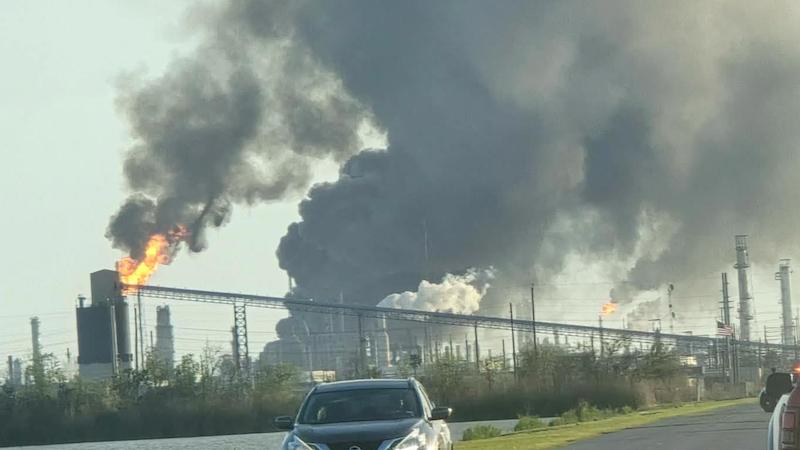
The fire at Valero’s Port Arthur oil refinery
The fire damage shut in over 380,000 barrels per day. That’s about 2% of the US refining capacity. However, we don’t think its loss, even for a few weeks, will create a country-wide supply crisis. It will further increase the price of petrol, at the very least, in the US.
The premium of a gallon of petrol over a gallon of oil is going to go up. Here’s what I mean…
The price of petrol is a function of the cost of oil, taxes, and marketing. Over the past couple of years, petrol costs about 24% more than a gallon of oil. But as you can see in the chart below, it can go much higher:

In 2022, petrol prices spiked to 122% over the price of oil. That means, if oil was $2 per gallon, petrol price was $4.44 per gallon. Since 2024, we saw it as high as 48% over the price of oil.
We can use this to roughly forecast earnings for refiners. When the premium is up, it’s good for them. When it’s low, it isn’t… and right now it looks promising.
The fallout from the Port Arthur fire could be a higher premium for petrol prices. That means gas prices could go up, even if the oil price doesn’t. That premium means refiners are going to make more money.
Refiners’ share prices soared quite a bit, as you can see here:
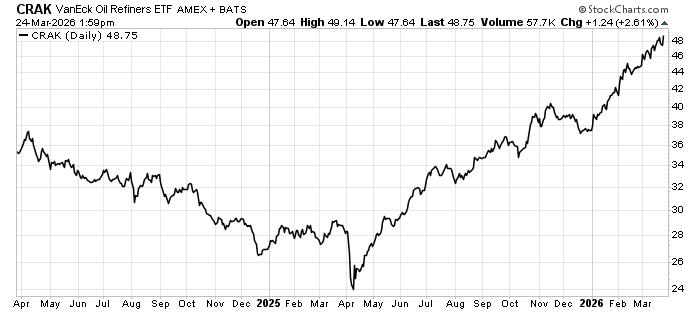
This trend remains in place. And while rising petrol prices are already feeding through to the wider economy, they’re also pointing to something more significant.
Because this isn’t just an energy story — it’s part of a broader shift that is still unfolding.
And as Jim Rickards and I explain, the next phase of that shift may prove far more consequential than the current spike.
Best,

Matt Badiali
Editor, Southbank Investment Research