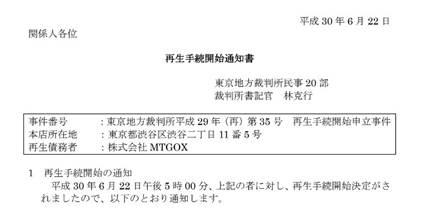
I received that letter by email on 23 June 2018, four years after Mt. Gox collapsed.
It was the official notice from the Tokyo District Court confirming the start of civil rehabilitation proceedings, effectively telling creditors that the remains of what had once been the biggest and most “trusted” exchange in crypto would finally begin paying people back.
Four years of waiting.
Four years of wondering how much of my Bitcoin I would ever recover.
I learned that lesson the hard way, and I never needed to learn it twice.
A lot of people in crypto today have never lived through something like that. FTX caught some people out in late 2022, but even that is starting to feel distant now. Celsius Network, Voyager Digital, BlockFi… those failures are all fading into the background.
It has been relatively quiet on the catastrophic blowup front, and the market has slowly started convincing itself that maybe this time really is different.
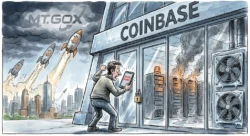
Then, Coinbase reminded everyone how quickly things can go wrong when you least expect it.
Britain’s Investment Letter Since 1938
In 1938, The Fleet Street Letter warned its readers that war was coming to Europe — and even identified September as the critical month.
Since then, its readers have been warned ahead of Black Monday, the dotcom crash and the 2008 financial crisis.
Today, Britain’s longest-running investment advisory is still looking for the “news behind the news” — and the investment opportunities others could be missing.
Click here to discover what The Fleet Street Letter sees coming next.
Capital at risk.
What Does Britain’s Oldest Investment Letter See Coming Next?
It warned readers ahead of Black Monday.
The dotcom crash.
And the 2008 financial crisis.
Now, nearly 90 years after it was founded, The Fleet Street Letter is still searching for the “news behind the news” — and the investment opportunities that could emerge from the next major turning point.
Click here to discover what its editors are seeing now.
Capital at risk.
A week of awful at Coinbase
Coinbase (Nasdaq: COIN) had a week to remember, and not for the right reasons.
CEO Brian Armstrong emailed staff announcing roughly 700 layoffs, about 14% of the company. But the move was framed as something visionary.
Coinbase, according to Armstrong, was being “rebuilt as an intelligence, with humans around the edges aligning it.”
No more than five layers below the CEO.
“Player-coach” managers overseeing 15 or more direct reports.
AI-native pods.
Experimental one-person teams spanning engineering, design, and product simultaneously.
Coinbase, apparently, was entering its AI era. Or at least that was the narrative.
Then Thursday arrived. And with it, earnings.
Q1 revenue down 31% year-on-year to $1.41 billion. A $394 million net loss. A surprise loss of $1.49 per share against analyst expectations of a 27-cent profit. Spot volumes off 37%. Transaction revenue down 23% quarter-on-quarter.
The Tuesday announcement makes a lot more sense now.
Cut headcount first. Package it as “AI transformation.” Let the market buy into the narrative before earnings land.
Block (Nasdaq: XYZ) pulled a similar move back in February.
Jack Dorsey announced 40% staff cuts under the banner of AI efficiency, the stock jumped 24%, and the headlines conveniently overlooked the fact the company had massively expanded its workforce during Covid and was now unwinding that hiring spree.
Coinbase entered 2026 with close to 5,000 employees. Now it has around 4,300. Whether you buy the AI transformation pitch or not, the timing tells you what was really driving the decision.
Then came Friday.
Coinbase went dark for almost seven hours.
An Amazon Web Services data centre in Northern Virginia overheated, taking large parts of the platform offline. Customers could not log in, trade, or withdraw funds. Armstrong called the outage “unacceptable.”
The reaction on X was less diplomatic.
According to Coinbase, customer funds were never at risk. But the largest crypto exchange in the US was effectively unreachable for most of a working day, in a market that prides itself on never closing.
NYKNYC
This is where the old crypto rule comes back into focus…
Not your keys, not your crypto.
If you do not hold the private keys, you do not truly own the coins. You own a claim against whoever does. Most of the time, that claim works perfectly fine. You log in, trade, and withdraw, and the illusion of ownership feels identical to the real thing.
It works brilliantly… until it doesn’t.
For seven hours on Friday, anything sitting in a Coinbase account was not really yours in any practical sense. You could not sell it, move it, or even properly confirm access to it. If the market had dumped 20% during that window, you would have been left watching it happen on somebody else’s chart.
Now, to be fair, Coinbase is not Mt. Gox.
It is public, regulated, audited, and customer funds are segregated. A solvency-style collapse is unlikely.
But the outage had nothing to do with fraud. It had everything to do with the most regulated crypto exchange on the planet relying on Amazon Web Services infrastructure, and one Amazon building getting too hot.
Whichever way you look at it, that is still an extraordinary amount of trust placed in too many third parties.
The stock traded below $180 in the middle of all this, only to bounce hard on Monday and climb back toward $215.
Even now, Coinbase (Nasdaq: COIN) is still roughly 50% below its 2025 highs. So the obvious question is whether it is worth buying here.
And honestly, there is a reasonable case for it.
Q1 earnings reflect where crypto has been, not necessarily where it is going. Tokenisation is rolling out across the New York Stock Exchange, Nasdaq, and global financial markets. Stablecoin volumes are climbing rapidly, and banks are becoming increasingly nervous about what that means for deposits and payment systems.
If the last few years were crypto winter, then we are almost certainly moving into crypto spring.
That means buying Coinbase near the lower end of the cycle, while the business restructures for the next leg higher, could look very smart by the end of 2027.
But that is the stock question.
The more immediate question is whether you are comfortable keeping all your coins on a platform that can lock you out right as the market explodes higher.
What happens if the next major move hits and you miss a 200% rally because you cannot access your account?
And if you still have not fully moved into self-custody, now is probably a good time to ask yourself why.
Use exchanges for entering and exiting positions. But for anything meaningful you plan to hold through this cycle and the next, self-custody where practical.
The next bull market is coming.
So is the next outage.
Risk comes in many forms. Just make sure you’re comfortable with all of them.
Until next time,

Sam Volkering
Investment Director, Southbank Investment Research
PS Coinbase going dark for seven hours is a reminder that modern markets run on infrastructure most people never think about… until it fails. And that applies far beyond crypto.
Right now, governments are pouring enormous amounts of money into rebuilding critical energy, mineral, and industrial infrastructure across the West. Not because they want to. Because they suddenly realise how fragile modern supply chains really are.
One veteran investor with deep connections across Washington, the intelligence world, and the energy sector believes this shift could trigger a genuine supercycle in critical resources, infrastructure, and industrial capacity.
He has already committed more than $1 million of his own money positioning for it.
And he is now showing readers exactly where he believes the biggest opportunities could emerge next.