
 In today’s Issue:
- How globalism led us astray
- The rise of nationalism is a response to China
- How populist governments will move financial markets
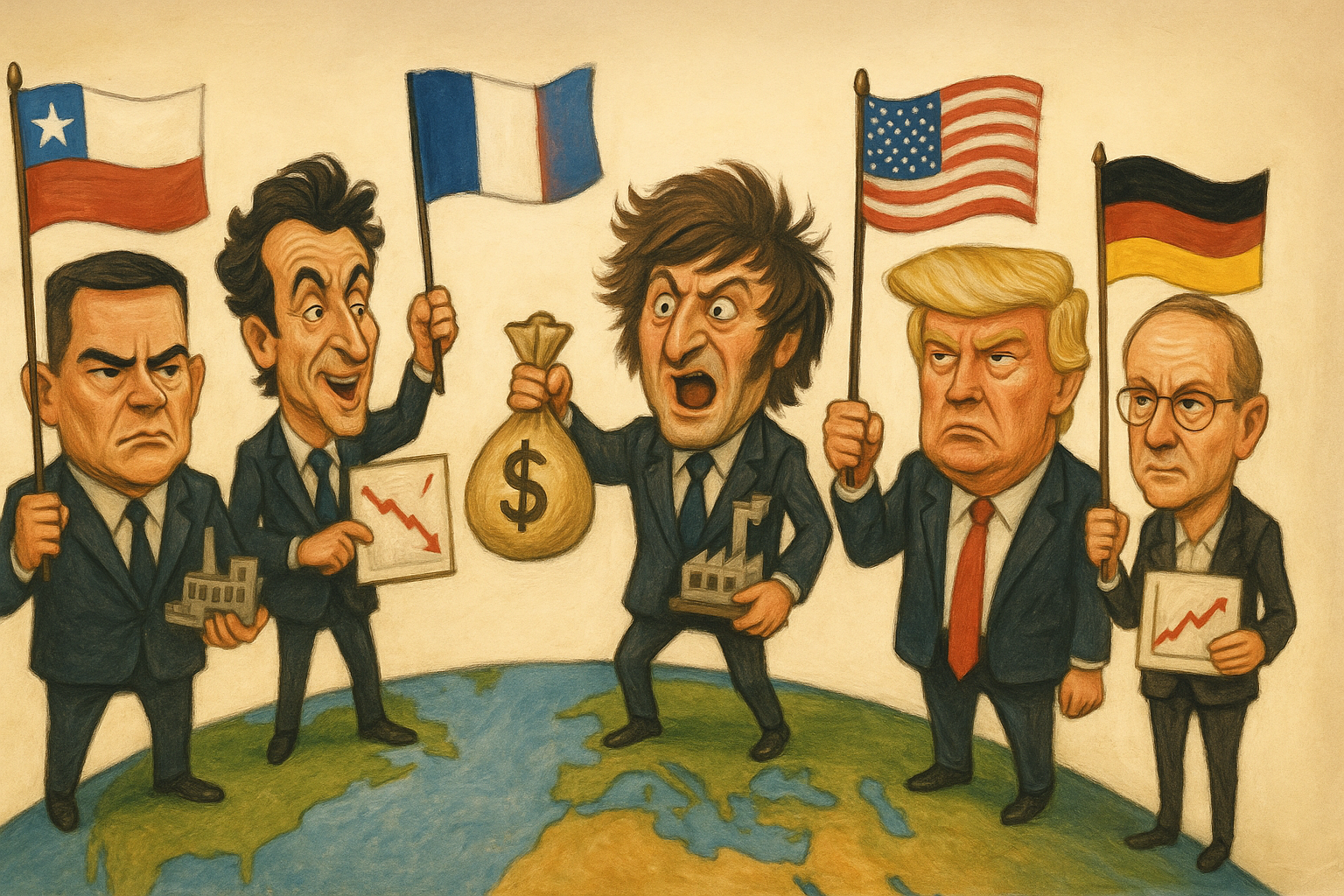
Well, now you can add Chile to the list. An extraordinary share of the world’s major economies are now led by “far-right” leaders. Or have “far-right” parties leading in the polls.
The thing is, they don’t actually have much in common…
Except perhaps nationalistic rhetoric. But that just promises to them an even more odd bunch of bedfellows on the international stage.
It’s their substantial differences that make their rise so interesting.
Chile’s new President is a staunch “law and order” social conservative.
In France, the “far-right” has the economic policies of the far left.
Argentina’s Javier Milei is an anarcho-capitalist – an extremist libertarian.
Italy’s Meloni has proven far more centrist than expected. She was supposed to be some sort of firebrand. But she’s busy attracting foreign investors…
In the US, President Trump has embraced the protectionist policies of the left and corporatism of the right.
On paper, Germany’s AfD claims to be libertarian, but with strong borders.
In the UK, Reform is courting voters and MPs from across the spectrum.
It’s all terribly confusing. And very difficult for investors to untangle.
The “far-right” label hides more than it reveals.
To understand where this is going, you need to get the right context. Because the rise of the “far right” is really just a response. A reaction to the ideology that appears to have failed us…
How globalism led us astray
For decades, economic prosperity was the primary goal of politics. Politicians didn’t care about geopolitical competition, secure energy supplies, the costs of immigration, trade deficits, fiscal deficits or sustaining a domestic manufacturing industry.
They cared about house prices, stock markets, trade, GDP growth, cheap goods, and a cushy appointment to lead some global institution after their political career had run its course at the national level.
They were globalists – largely indistinguishable from each other with a vision of making their countries less distinguishable too.
This policy setting worked reasonably well. Asset prices in the property and the stock market rose. Goods became cheaper. GDP grew. Trade boomed.
The costs were hidden. Western economies’ manufacturing and energy industries were hollowed out. We grew dependent on the likes of Russia, the Middle East and China for energy and goods. Office jobs replaced factory jobs.
But no trend can last forever.
Property is now too unaffordable. Many university graduates earn less than tradespeople. Trade deficits have maxed out at impossible financial imbalances. Stocks are dangerously overvalued. Supply chains are so complex that they’ve become fragile. Immigration rates are so high that assimilation has ceased.
And, most important of all, Russia and China have made their move. They made it in the belief that the West can’t mount much of a resistance, given that we rely on them to keep the lights on and provide Christmas presents.
The rise of nationalism is a response
Back in January 2019, I predicted the rise of nationalism in The Fleet Street Letter. I called it the “Populist Reformation”.
The premise was simple. We were on the cusp of populists taking government across Europe. But their identity and policies were badly misunderstood.
Just like the Reformation that Martin Luther inspired 500 years ago, the real undercurrent propelling change today is rising nationalism.
Martin Luther was the German nationalists’ ticket to statehood…without going to hell for it. His principal backer and protector was a Catholic politician. Frederik III wanted Germany to become a country instead of small states under the thumb of Holy Roman Emperors.
What’s motivating the “far-right” today is a belief in the nation-state over and above globalism. You can think of it as democracy and national identity fighting back after years of global institutions imposing globalisation and immigration. The motivations vary a little, but the vehicle of the nation-state is the one that gets the populists to where they want to go.
The nationalists’ ideology views economics as a competition between countries. Perhaps even as a zero-sum game, meaning that one country can only succeed at the expense of another. They view a trade surplus as “winning” and a trade deficit as “losing”.
This is wrong headed. The whole point of trade is that it is mutually beneficial. But that’s a difficult perception to dodge when some countries are behaving as though it’s true.
The rise of nationalism is a response to China
For decades, China has pursued mercantilism. It used subsidies, state-backed enterprises, lax environmental standards, and other dodgy practices to undercut the “free-trade” West in strategic industries.
The West pretended this wasn’t going on. Mostly because our corporations were able to move to China and profit from it. And because it made our consumer goods cheaper. Only a brave politician would’ve spoken out against rising stocks and cheaper goods.
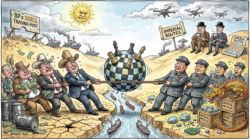
But when one player in a board game is cheating unopposed, the practice quickly spreads.
Populist leaders today are pitching to give China a dose of its own medicine by imposing their own trade restrictions. They want to give their own industries an unfair leg up in response to China’s success doing so. They want to win the game of trade surpluses and deficits.
Unfortunately, China won’t give up so easily…
What this means for financial markets
Political pendulums swing back. In coming years, nationalistic politicians will prioritise goals other than economic prosperity. Far less tangible priorities will decide which policies are implemented.
Domestic production of strategic goods and resources will become more important. Even if they are less efficient and more expensive.
Alliances will become smaller and more insular as the global market is viewed with suspicion.
And China will make it difficult to wrestle industries back off their hands. The Netherlands’ Nexperia debacle shows how.
Investors need to understand that their returns are no longer going to be government’s priority.
The glory of the nation state will be. Investors will be asked what they can do for their country instead of what their country can do for them.
Until next time,

Nick Hubble
Editor at Large