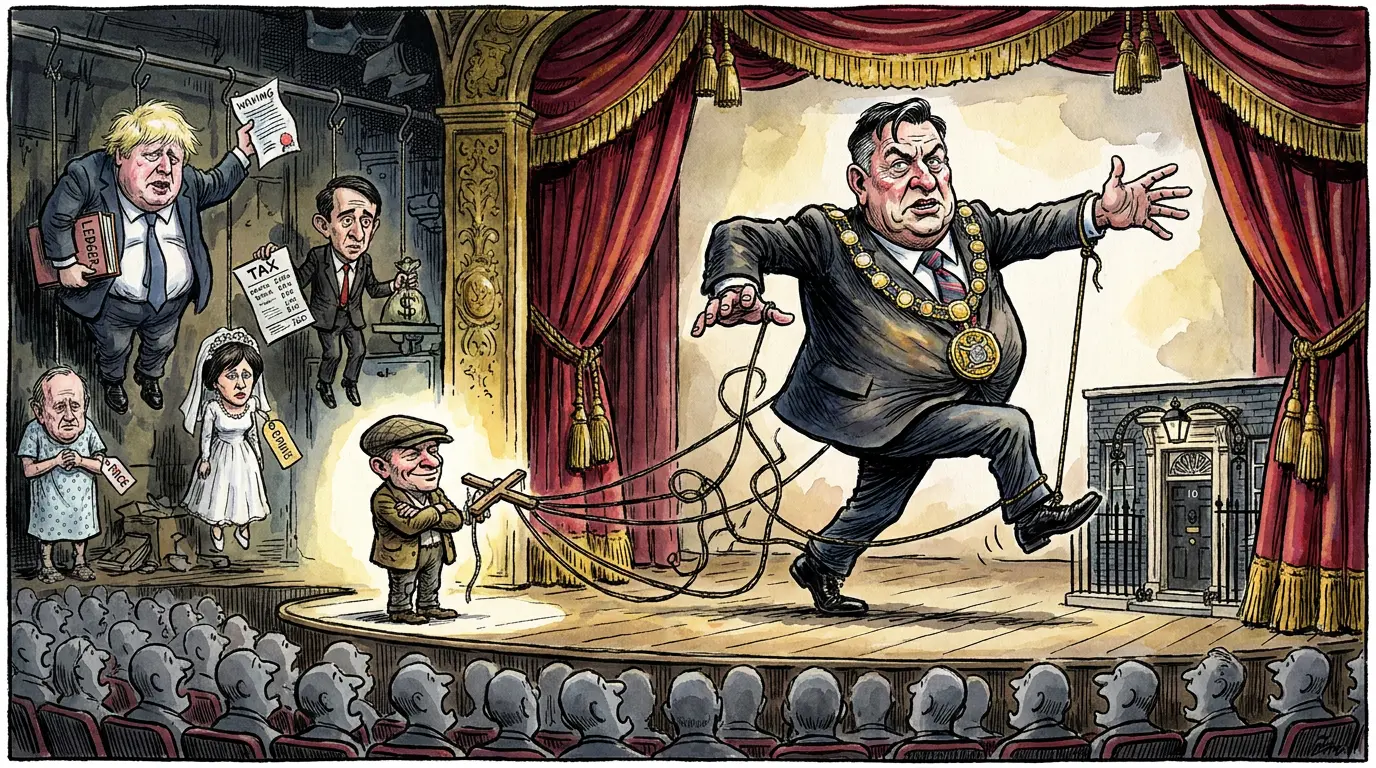
 In today’s Issue:
- Prime ministers don’t do what’s expected of them
- The real Andy Burnham won’t stand up for election
- Who will Labour target next?
The debate about our next prime minister is raging.
Is he a socialist, or a closet capitalist? Did he engineer a housing boom, or ride the coattails of one? Will he level up the North or level London?
What bothers me isn’t just that nobody really knows. It’s that prime ministers blatantly do the opposite to what you’d expect anyway.
So, even if we did know what he had planned, he’d still surprise us with something else. An election would only make it a slightly larger surprise. Amongst the gullible, anyway.
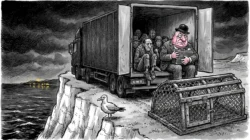
Who saw Boris Johnson’s wave of immigration coming? Or his draconian lockdown policies?
Labour still hasn’t forgiven Starmer for his winter fuel allowance cuts.
Rishi Sunak cracked down on non-doms, of all people.
And David Cameron liberalised gay marriage.
Tony Blair allowed competition in the healthcare sector.
Theresa May’s dementia tax was a complete surprise.
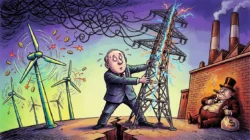
The Conservatives pushed climate change policies harder than Labour.
The point is that governments, once they get in, do the opposite to what they were elected for. Not just in terms of their manifestos. But their whole ideological bent.
That’s what their inevitable “must govern for the country as a whole” speech is all about. It’s how they explain turning into a completely different human being once they get elected.
If they were human to begin with… and if they were elected.
So, the debate about what Burnham will get up to is completely pointless. He will turn into someone different once he walks into Number 10. And probably someone different again while in the “No. 10 North.”
For all we know, he’ll list the country’s railways on the Nasdaq, legalise fracking in Yorkshire, and let AI run the country while he lives in Kent.
It shouldn’t surprise anyone.
People will rant and rave about it. But few will ask why this keeps happening.
And that’s where investors can get an edge…
Forget AI, America’s No.1 forecaster says a bigger boom is coming:
“I’ve invested $1 million of my own money to prepare for this…”
He predicted the Financial Crash, both Trump victories and 2025’s record rare metals surge that saw stocks soar as much as 645%
Now discover the move he is making as America seeks to unlock a home grown fortune potentially worth trillions on Friday, May 15th
Find out what that move is right here >>
Capital at risk
The marginal voter controls the whole country
150 years ago, the Marginal Revolution upended the science of economics. It argued that aggregates don’t matter. People make decisions at the margin.
We don’t set out to eat three pieces of cake. We repeatedly decide whether or not to have one more piece of cake. And stop when the costs of the next piece of cake outweigh the benefits.
I could explain just how important this idea is to economics. But we can skip that and expose how much it matters to politics instead, because the mechanics are the same…
It doesn’t matter what politicians believe or stand for. It doesn’t matter what people vote for. Nor how political policies impact them.
What matters is how particular parties can capture the nearest marginal voter. The next most likely person to vote for them. That’s the nature of a democracy.
An environmental policy will capture some voters from the Greens. A tax on investors will suck in voters from the left. Law and order crackdowns hook in some conservatives. And “cutting red tape” attracts entrepreneurs.
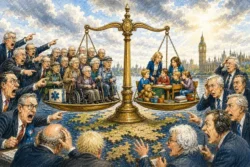
This means that a very small number of voters actually run the country. Because politicians are really just trying to get them over the line with narrow policies. The rest of us don’t matter.
The result is an incoherent mess of policies. The government’s bizarre focus on woke issues, green energy, intergenerational equity, house prices, Palestine, knives, and more are driven by trying to capture various swing voter interest groups.
What the bulk of us want, and how policy affects us, is ignored because we are unlikely to vote differently based on isolated policies that only impact us slightly.
What matters is how a policy disproportionately impacts a select few, who then have the incentive to vote for the government.
Dispersed costs, concentrated benefits – that’s the name of the game of staying in government.
And it explains some very odd policy moves of late…
Two tier policing has huge benefits for some communities. They have an enormous incentive to vote for those promoting the policy.
Universities and former immigrants with families yet to move over benefitted enormously from the Boris wave.
Gay marriage helped many conservatives come out of the closet by openly voting for the right for the first time.
The Iran War created vast amounts of jobs in the defence industry, while the rest of us paid slightly more at the pump.
The EU’s tariffs are a classic example too.
This phenomenon also explains why governments get caught out by unintended consequences. Because they didn’t care about them. The focus was on the marginal voter being targeted. On the concentrated benefits, not the dispersed costs.
To predict government policy, you need to figure out which small group of marginal voters the government will target next.
Who will Andy Burnham target?
Who is the marginal voter Labour can get over the line with a targeted policy?
I think it’s a group of voters that once favoured Labour, until it abandoned them to attract environmentalist marginal voters instead.
A group living in a part of the UK Labour has recently lost vote share, but could take back again.
Voters that have been promised more devolution.
Voters the Conservatives failed with their hollow promises of green energy jobs.
Next Thursday I’ll reveal the one investment that’ll soar if I’m right. Sign up for our free live event to ensure you don’t miss it.
Until next time,

Nick Hubble
Editor, The Fleet Street Letter