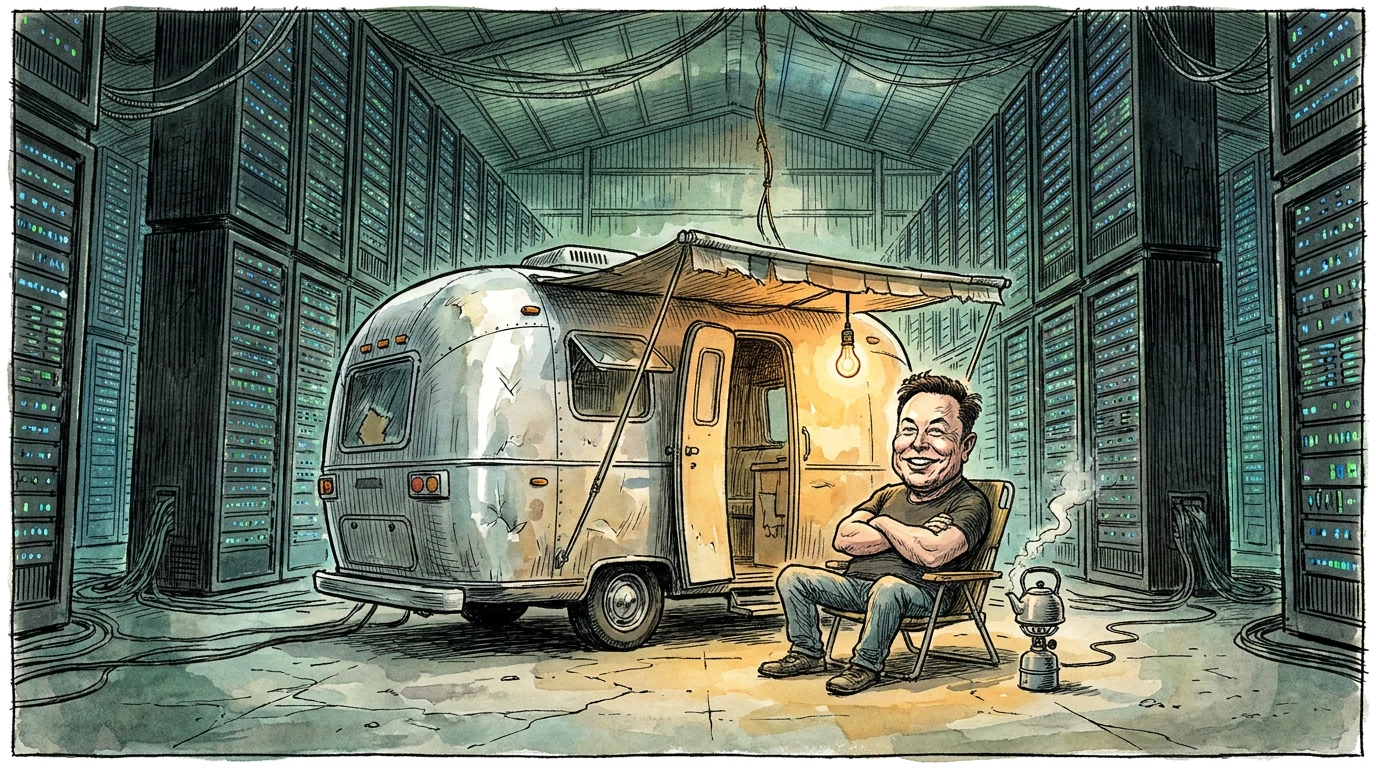
 The richest human alive has moved into a caravan.
Elon Musk told the All-In podcast on Monday that he’s living in an Airstream trailer in Memphis, parked beside the servers at xAI’s Colossus site. He calls it his “palace.”
Elon’s more or less a trillionaire, so it’s kind of a “thing” when he’s living alongside the (soon to be) most powerful AI training cluster on the planet in an Airstream.
Gwynne Shotwell, who runs SpaceX day to day, backed him up:
This is Elon, by the way, doing what people don’t believe he does. He sleeps on the factory floor. He’s in Memphis, helping build buildings.
I bring this up because I want to ask you a question…
Are these the actions of an AI doomer?
Someone who really thinks AI is going to end us all?
No, it’s not.
Doomers don’t sleep 20 metres from the thing supposedly about to end the world.
Musk is camped there because he knows that when that AI factory is complete, it will earn for him and his companies like nothing else on Earth.
How much will it earn?
Well, thanks to Nvidia’s CEO, Jensen Huang, we’ve got a bit of an idea.
One year to pay off a $60 billion machine
Talking with Jim Cramer on CNBC this week, Huang laid out the economics of an AI factory.
Building one gigawatt of Nvidia (Nasdaq: NVDA) AI factory capacity costs US$50 billion to US$60 billion.
That’s a heck of a lot of money.
And you’d think with all that capital expenditure, it would take years to pay back… maybe even over a decade.
But you’d be wrong.
Hazard a guess at how long the payback on a US$50 billion, 1 GW AI factory is?
Huang says renting it out earns about US$50 billion a year.
So, the payback on invested capital now is roughly one year.
Then the factory keeps earning well beyond years five and six.
So, for every year past the first, it’s profit.
You can see why they’re going up faster than people can count.
And you can understand why Musk is camped in a caravan right next to his to ensure it’s on time and delivering the payback at scale.
Sounds mad, but this is what’s happening.
This is why Huang isn’t concerned about the doomerism.
It’s why Mark Zuckerberg and Meta aren’t concerned.
It’s why Jeff Bezos and Amazon aren’t concerned.
Now, every bear on the planet will tell us these are all depreciating assets.
That their lifespan is at best a few years.
That by the end of year three, they’re worthless and need upgrading, and it’s all diminishing returns on accelerating costs.
They’re wrong.
And here’s proof.
Forget AI, America’s No.1 forecaster says a bigger boom is coming: He predicted the Financial Crash, both Trump victories and 2025’s record rare metals surge that saw stocks soar as much as 645% Now discover the move he is making as America seeks to unlock a home grown fortune potentially worth trillions on Friday, May 15th Find out what that move is right here >> Capital at risk“I’ve invested $1 million of my own money to prepare for this…”
The used market emphatically says no to the bears
Nebius (Nasdaq: NBIS), one of the big AI landlords renting Nvidia chips by the hour, told customers that its on-demand prices will rise from 1 October.
H100s will go from US$3.85 to US$4.50 an hour.
H200s from US$4.50 to US$5.40.
B200s from US$7.15 to US$8.50.
And B300s from US$7.85 to US$9.50, a rise of about 21%.
That’s Nebius’ second hike since May, and the stock rose about 6% in after-hours trade.
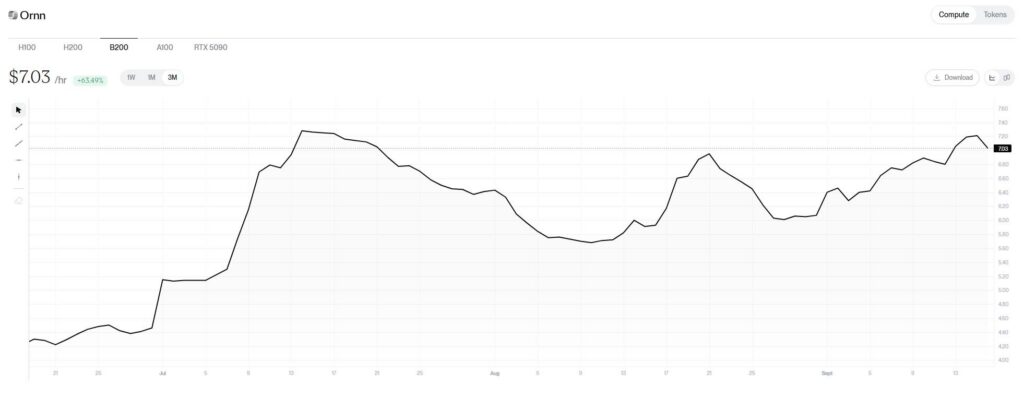
The exchange data backs it up. Over the past three months, B200 rates have risen 63% to US$7.03 an hour and H200s have risen 51% to US$5.27.
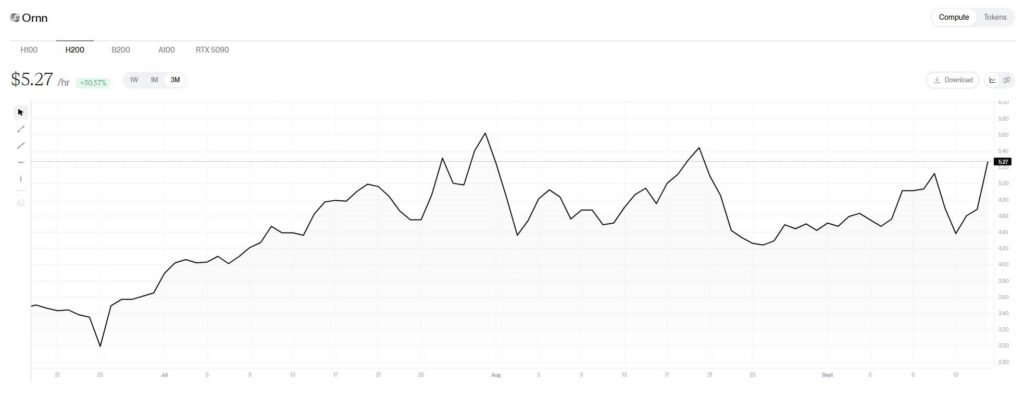
Even the H100, a chip that launched in 2022, is up 9% at US$2.62. The old chip is getting dearer with age, not cheaper.
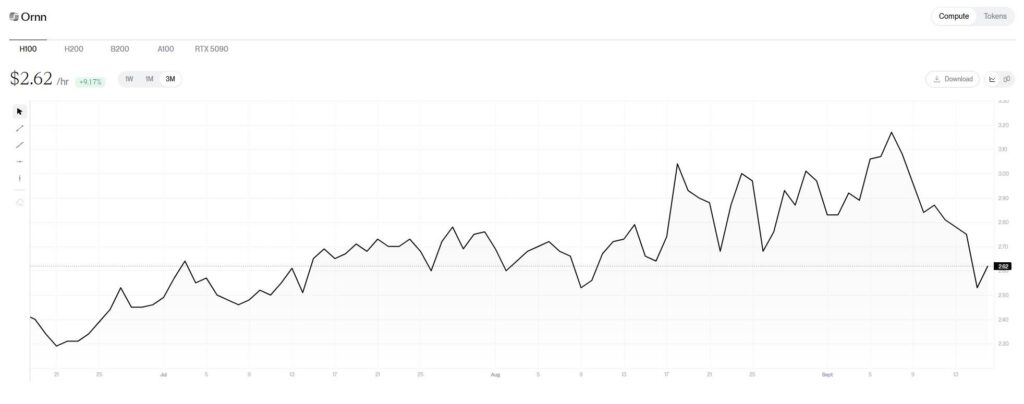
And, in August, CoreWeave (Nasdaq: CRWV) signed a contract to keep renting A100s through 2029. That chip launched in May 2020, so that’s nine years of return on a chip the bears say lasts for three.
Some computers designed more than 60 years ago are still running critical systems today. Where are you most likely to find them?
Find out what your friends and family think as well. Share this email with them so they can answer today’s poll and subscribe as well. |
That reality is that it likely even goes beyond a decade of usable compute.
Clearly, at some point this compute will reach the end of its life. Maybe.
When you think about it, the idea of buying a couple second-hand H100s and running your own local home AI in 2036 maybe isn’t so wild.
In fact there’s probably a great business model there… in a decade… for refurbished AI factory tech, taken into the home.
Shortages, scarcity, and ever extending lifespan of all this technology are what’s fuelling and driving the profits being generated.
And yes, the doomers can say it’ll kill us all, and plenty of people will believe them. But they’ll be proven wrong time and time again.
Maybe there’s a market correction on the horizon. Historically there’s always something that makes the market volatile. But as the saying goes, even a stopped clock is right twice a day.
I’d use any pullback in AI names to add the companies collecting the rents and building out the AI factories of the future.
There’s plenty there, and there’s plenty of opportunity to not just play the AI trade, but to use AI in your own trading and investing, as I’m currently doing with readers with Hyperion.
So much opportunity, so much to enjoy about using AI. There’s just no point in giving energy to the doom that’s never going to land.
Until next time,

Sam Volkering
Investment Director, Southbank Investment Research
PS Saudi Arabia spent the 1980s building its insurance policy against Iran. A handful of drones knocked it out. Britain has no such policy. But it may be sitting on something far larger.
That 511-billion-barrel British oil story is exactly what I investigate in this special briefing. I reveal the company I believe is positioned to benefit, why this opportunity has suddenly become even more important, and how the speculative returns could potentially reach as much as 25,000% in the years ahead.
You can get the full story, including the ticker, here.
PPS Yesterday, I asked in AI scares you…
33% of you said “yes, things are moving too fast.”
41% of you said it scares you a bit.
15.2% of you said it doesn’t scare you and that doomers are over doing it.
And 9.5% of you said it doesn’t scare you in the least. “Bring on the AI revolution.”
Hopefully, after reading today’s essay, more of you are excited about the future.