 |
 |
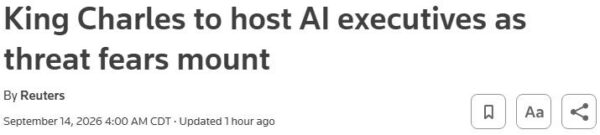 |
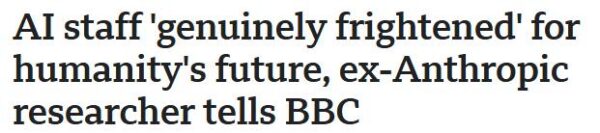
Yesterday, all eyes were turned fearfully toward warnings that we may be dooming humanity in our rush toward AI.
The Philadelphia Semiconductor Index – which tracks some of the companies supplying the chips behind the AI revolution – fell around 6% at one point.
While we are not a mainstream news outlet, it would be foolish to ignore the sentiment.
So rather than wrap up our Billionaire Files series the way I’d planned, let’s consider how this AI-related fear gets right to the problem we’ve been talking about.
I believe AI is going to change the world.
I don’t believe it will end it.
People love drama…
And fear gets clicks…
Focus on the numbers instead.
The Bank for International Settlements estimates that the world’s five largest technology companies will invest more than $1 trillion in AI across 2025 and 2026 alone.
And industry forecasts suggest global AI investment could rise to as much as $4 trillion by 2030.
So the slide in share prices of Nvidia, AMD, Broadcom, or any one of the dozens of companies supplying the chips, memory, electricity, networking equipment and data centres required to make this revolution possible is an opportunity.
Forget AI, America’s No.1 forecaster says a bigger boom is coming:
“I’ve invested $1 million of my own money to prepare for this…”
He predicted the Financial Crash, both Trump victories and 2025’s record rare metals surge that saw stocks soar as much as 645%
Now discover the move he is making as America seeks to unlock a home grown fortune potentially worth trillions on Friday, May 15th
Find out what that move is right here >>
Capital at risk
So what do you do?
First, don’t become a victim of fearmongering.
Second, look to this example about how to potentially handle this AI stock meltdown…
Suppose there’s an AI company you desperately want to own. Let’s call it AI Corp.
It trades at £50.
You believe in the technology and the company. And you think the opportunity over the next decade could be enormous.
But you don’t particularly want to pay £50, even though that’s where the price has fallen in the Monday rout.
You’d love it at £40 though.
So start thinking about the investment differently.
Ask…
I’ll agree today to buy AI Corp at £40 if it falls there. But I want to be paid for making that commitment.
That isn’t hypothetical.
Options markets allow investors to do precisely that.
You can accept an obligation to buy shares at a predetermined price and receive money upfront in exchange.
There are real risks.
If AI Corp collapses to £20, you could still be required to buy it at £40.
That’s why this only makes sense with a company you genuinely want to own, at a price you’re genuinely prepared to pay, with sufficient capital available to honour the obligation.
But now, instead of sitting around hoping AI Corp gets cheaper, you’re being paid while you wait.
Sean Allison, the brains behind Reliable Trading Circle, takes the idea one step further.
But what if £40 isn’t the bottom?
Let’s consider what to do if the AI trade continues to unwind though…
Suddenly £40 doesn’t look quite so enticing.
Because what if this isn’t just a wobble?
What if £40 becomes £35?
Or £30?
Or £20?
If somebody pays you today for agreeing to buy AI Corp at £40, they’re not giving you free money. They’re paying you to accept a risk.
Like I said earlier, if the shares subsequently collapse to £20, you could still be obliged to buy them for £40.
Sean’s answer isn’t to pretend that risk can be eliminated.
It’s to think about how that risk can be structured.
Rather than simply pocketing the money you’re paid for accepting the £40 obligation, his Ultimate Risk Reversal looks at whether that money can be used to acquire upside exposure to the same company.
One part of the position can therefore help finance another.
Under the right circumstances, that can mean establishing the overall position with little – and potentially no – net upfront premium.
But don’t confuse no upfront premium with no risk.
They’re very different things.
Sean isn’t making the risk disappear. He’s changing the shape of it.
And there’s nothing new about the thinking behind this idea.
For the past week, we’ve been looking at some of the world’s most successful investors and discovering, in different ways, the same thing Sean is doing here:
They don’t simply accept the risk-and-reward equation the market hands them. They look for ways to change it.
This is what the billionaires were teaching us
Warren Buffett showed us that accepting risk can have a price.
Sometimes somebody will pay you to take a risk they’re trying to get rid of.
Stanley Druckenmiller showed us that being right and being wrong don’t need to have equal financial consequences.
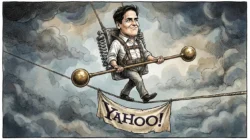
Mark Cuban showed us that we don’t necessarily have to accept the default payoff that comes with owning an investment. We can restructure it.
This same strategy could help investors navigate the current market fears around AI.
To be clear, there are risks… especially with options trading.
But, it’s worth listening to Sean tomorrow at 6 pm BST to hear him explain how this all works. This is your last chance to register for his free webinar on Wednesday. Take it.
Regards,

Elizabeth Cox
Associate Publisher, Southbank Research
PS Sean’s presentation tomorrow is free to attend, but you do need to register in advance.
His approach involves real investment risk. If you accept an obligation to purchase shares at an agreed price, you may be required to do so even if their market value subsequently falls substantially below that price. Losses on the shares can exceed the money initially received, and sufficient capital must remain available to meet that obligation.
Investing is always risky. Never invest more than you can afford to lose.