 Constantino Davidoff is an Argentinian scrap dealer who borrowed $2.5 million on a calculated gamble that a pile of rusting whaling sheds had more value than people realised…
In 1978 he signed a deal with Christian Salvesen, a Scottish company, to strip its dead whaling stations on South Georgia, about 870 miles east of the Falkland Islands.
The Argentine Navy saw an opportunity, and a better use for his contract. It planned to sneak a secret military base onto British soil under cover of Davidoff’s crew.
London had also put HMS Endurance, its only patrol ship in those waters, up for withdrawal in the 1981 defence review.
So about 40 of Davidoff’s men step off a navy transport at Leith Harbour with no landing clearance.
However, in the mix are naval commandos posing as scientists. It is an invasion landing party.
Suddenly, someone runs the Argentine flag up a pole.
That was 19 March 1982. London sent Endurance south two days later with Royal Marines aboard.
The scrap-metal landing was really a probe. The junta wanted to see how Britain would react to Argentines planting a flag on British soil.
Argentina invaded the Falklands on 2 April 1982.
The next day 22 Royal Marines at Grytviken brought down a helicopter and put a rocket into a corvette (a small warship, not the car) before surrendering.
The task force sailed three days later. Argentina surrendered at Stanley 74 days after it invaded.
But the everlasting damage was done: 255 British servicemen and three islanders died. And tensions have existed ever since.
I wasn’t born in 1982. So I only know about the Falklands from the history books.
But I’m curious to know what you remember from 1982?
Maybe it’s the ships leaving Portsmouth on the evening news? Or something else?
And do you feel that it pulled the country together, or is that the rose-tinted version?
Thatcher did take a big majority after the war ended and it’s said her actions drove a big part of that.
Would you agree?
Write in and let us know investorsdaily@southbankresearch.com because it’s all kicking off in the Falklands again…
In 1938, The Fleet Street Letter warned its readers that war was coming to Europe — and even identified September as the critical month. Since then, its readers have been warned ahead of Black Monday, the dotcom crash and the 2008 financial crisis. Today, Britain’s longest-running investment advisory is still looking for the “news behind the news” — and the investment opportunities others could be missing. Click here to discover what The Fleet Street Letter sees coming next. Capital at risk. It warned readers ahead of Black Monday. The dotcom crash. And the 2008 financial crisis. Now, nearly 90 years after it was founded, The Fleet Street Letter is still searching for the “news behind the news” — and the investment opportunities that could emerge from the next major turning point. Click here to discover what its editors are seeing now. Capital at risk. Britain’s Investment Letter Since 1938
What Does Britain’s Oldest Investment Letter See Coming Next?
Paperwork before the gunboats
There’s no secret landing party aboard a scrap-metal contract now. But there could be some subversive attacks on the oil men down there.
The Sea Lion field sits about 150 miles north of the Falklands. It’s said to hold up to 1.7 billion barrels of oil.
Tel Aviv-listed Navitas Petroleum and British company Rockhopper Exploration (AIM: RKH) are working the field, aiming for first oil in early 2028.
Argentinian President Javier Milei wants it stopped.
Argentina has opened sanctions cases against more than 60 companies and people tied to the project, and asked Interpol to detain the executives.
Milei gave Britain two weeks to halt “the illegal plundering of our resources.” When the clock ran out on Tuesday, Argentina asked the Law of the Sea tribunal in Hamburg to stop the drilling.
Britain is not impressed.
It responded that same day from the least likely desk you can imagine.
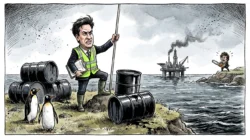
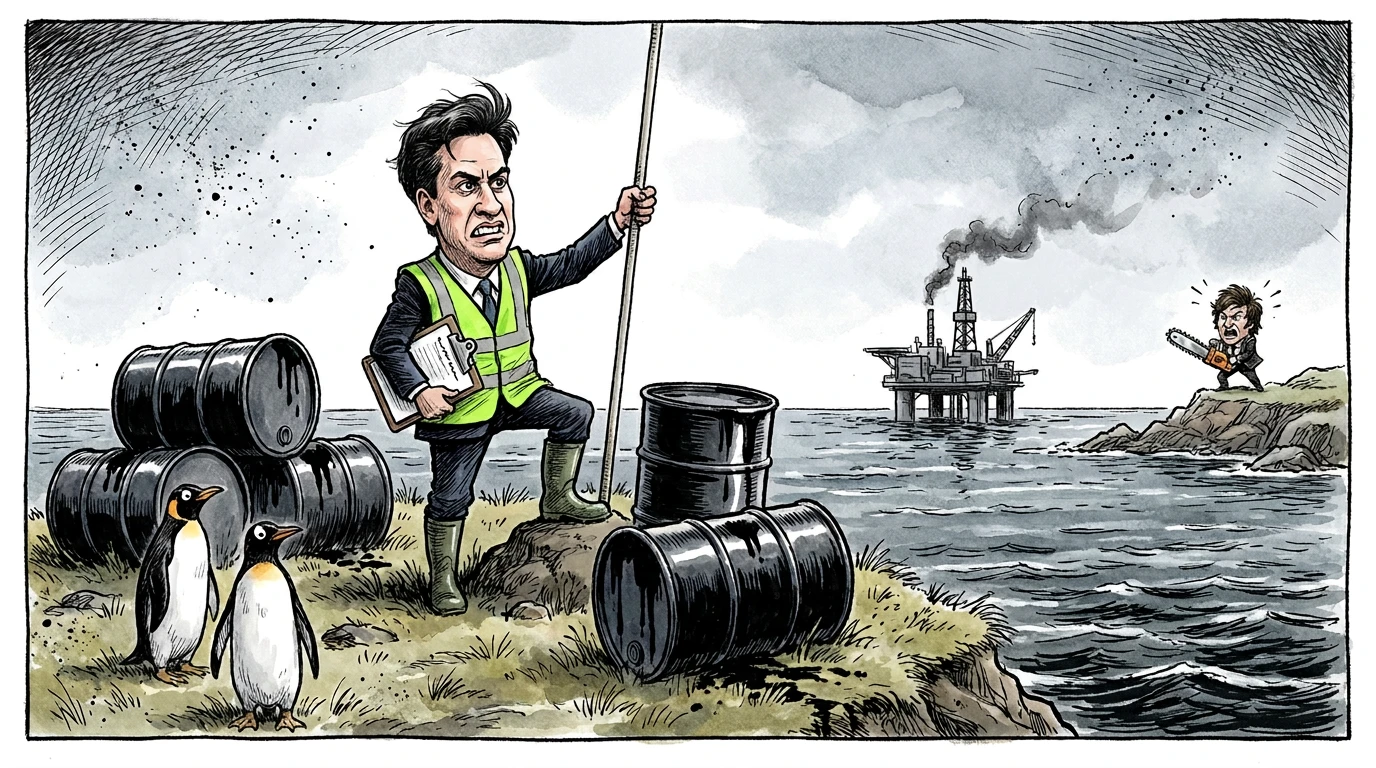
Ed Miliband, who as energy secretary halted new oil and gas exploration in the North Sea, signed off on Sea Lion as Foreign Secretary this week.
Then the government published this,
Argentina’s attempts to intimidate businesses and individuals engaged in legitimate commercial activity are unacceptable. Companies should be free to make lawful commercial decisions without the threat of political coercion. We will always stand up for the Falkland Islanders, their right to determine their own future, and their right to pursue legitimate economic development.
Can you believe the biggest Net Zero zealot of them all, going in to bat the hardest and standing guard over an oil field thousands of miles away!?
That doesn’t just tell you about the importance of the Falklands to Britain… it also tells you of the importance of the oil resources down there too.
Added to this, new trade laws, due before the end of the year, will stop Argentina forcing its rules on British firms.
Even the Prime Minister told the Commons he’d do “whatever it takes” to keep the islands British.
The threat of another invasion is becoming so real and present that the Army is actively running exercises to ensure they’re ready to go this time. No Argentine flags going up unexpectedly.
In Exercise Cape Upholder, about 150 soldiers and 100 local reservists spent six days storming ashore at San Carlos, then marched 20 miles through the night.
Defence sources say it was planned well before Milei’s latest threats. But it’s also fair to say they’re not doing this without a good reason either.
The big question we have is this: Is Britain on the edge of another 1982?
They’ve been talking up the threats, but do they really have it in them, let alone the funds, to actually invade the islands?
Follow the barrels south
This situation seems to escalate every week. After 44 years you have to wonder why now?
Not just that, but why would a Labour government and the most anti-oil minister of all, Ed Miliband, go this far for one field?
I suspect it’s because Sea Lion is just the front door, and a second production ship could lift the potential to 180,000 barrels a day, or 65.7 million barrels a year.
From there, just a bit further south sits a far bigger prize. MPs heard in 2024 that Russian survey ships had found about 511 billion barrels under the Weddell Sea, inside British Antarctic Territory.
It stands to reason that Britain wants to retain control of what’s happening now, and what potentially opens up next. Strategically coughing that up to Argentina is just a non-starter.
It also explains why Argentina wants it all so bad. The winner guarantees themselves energy security.
What we’ve seen from the government in response to everything this week is a telling sign. Sure, they may have given up on the North Sea (stupidly), but maybe they’re just more interested in shifting British oil south, not turning off the tap completely.
And if that comes under threat, the need to ramp up defence spending also suddenly becomes the highest of priorities.
In an absolute worst case scenario, if there is war, maybe it’s the unifying and decisive actions to stamp it out with extreme force that carries the incumbent government through to another big term in office…
Until next time,

Sam Volkering
Investment Director, Southbank Investment Research
PS The Falklands dispute is another reminder of just how valuable oil remains – whatever politicians might say about the energy transition. And with geopolitical tensions threatening supplies around the world, the stakes are only getting higher. We’ve identified an opportunity to position yourself for what’s unfolding in the oil market. Discover the full story here.