 My two boys have grown up on retro gaming consoles, and modern consoles that have emulators and ROMs of retro games.
In short, playing video games in my household isn’t Fortnite or Call of Duty or any of that junk. It’s games from the Nintendo Entertainment System (NES), the SNES, Mega Drive, N64, Dreamcast, Game Boy Advance, and Nintendo DS.
So when they said last weekend they wanted to make their own video game, I already had an inclination as to how they wanted it to look.
Chunky pixels, a kid in a karate gi, and a whole city of baddies to punch, kick, and spin through.
The idea was all theirs (the boys love their karate training). The name, the characters, the moves, even the secret areas you reach by climbing bins and cars to hop the fences.
All of it thought up by the creative minds of a seven- and five-year-old.
But all of the coding and building of the game… Claude Code.
It’s called Karate Knockout and it’s live online. You can play on PC, or on a mobile device. It’s free and you can find it at https://kiyah.vercel.app made by Max and Parker V.
By the way the boys would love your ideas for the next level, or improvements to the game.
Then today, I spent the better part of an hour talking, out loud, to Grok Bot to set up my own agent. Grok Bot is the xAI product (owned by SpaceXAI, soon to be changed again to SpaceXSI), where each bot gets its own computer in the cloud.
I’m also on the waitlist for Muse, the AI agent Meta launched a few weeks back but hasn’t opened outside the US so far.
Oh, and I recently had Claude look over some legal papers for me. It’s no seasoned lawyer, though some would argue it’s close, and its view on the paperwork was outstanding.
So I use a lot of AI, on purpose. However, apparently based on recent data, that puts me in a tiny club…
Then I went to the basketball.
In 1938, The Fleet Street Letter warned its readers that war was coming to Europe — and even identified September as the critical month. Since then, its readers have been warned ahead of Black Monday, the dotcom crash and the 2008 financial crisis. Today, Britain’s longest-running investment advisory is still looking for the “news behind the news” — and the investment opportunities others could be missing. Click here to discover what The Fleet Street Letter sees coming next. Capital at risk. It warned readers ahead of Black Monday. The dotcom crash. And the 2008 financial crisis. Now, nearly 90 years after it was founded, The Fleet Street Letter is still searching for the “news behind the news” — and the investment opportunities that could emerge from the next major turning point. Click here to discover what its editors are seeing now. Capital at risk. Britain’s Investment Letter Since 1938
What Does Britain’s Oldest Investment Letter See Coming Next?
How tall, brought to you by Google, Micron, SK Hynix, Samsung, Kioxia…
At the basketball game, there was a player who we wanted to know how tall he was and what kind of money he would be on.
One of our group pulled out his phone, tapped the voice button, and asked Google. As you’d expect, the answer came straight back.
I know for a fact that wasn’t old-school search. It didn’t provide any links, it was just natural text. The same kind of thing you get from Gemini, Google’s top AI model.
Maybe he knew the answer was AI, maybe he didn’t, because to him it was just Google being a bit smarter and more useful than last year.
But I reckon he had no idea that answer was far more than 6’11” and US$1 million.
Gemini runs on Google’s own AI chips, its Trillium and Ironwood tensor processing units (TPUs). Google Cloud also runs racks of Nvidia (Nasdaq: NVDA) GB300 systems.
Those chips talk to each other through optical circuit switches, which bounce light around with tiny mirrors instead of turning it into electrical signals. Google’s optical switches are called Palomar.
While not the ones Google uses, other major frontier AI use optical switches like these made by Lumentum (Nasdaq: LITE). Such is the demand for this optical wizardry, Lumentum’s shipments doubled in the three months to June.
All of it uses memory from Micron (Nasdaq: MU), SK Hynix (Nasdaq: SKHY) and Samsung (KRX: 005930). The data sits on storage from Samsung, Kioxia (TSE: 285A), Western Digital (Nasdaq: WDC), and Sandisk (Nasdaq: SNDK).
Then there’s the power to run it, which is a story for another day.
And there are a lot of these questions. Google said in early 2025 it handles more than five trillion searches a year.
“AI Mode” is the answer box you now get with your Google searches. Sundar Pichai explains:
“Since expanding AI Mode globally last October, we’ve surpassed 1 billion monthly active users. And just like AI Overviews, AI Mode is driving an incremental increase in Search queries overall, and we’re now sending billions of clicks to websites every week through AI features in Search.”
AI isn’t eating search, it’s making it better
The Gemini app has another 950 million monthly users on top.
Google’s models were working through 22 billion tokens a minute for developers, up from 16 billion three months before.
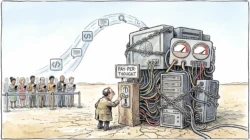
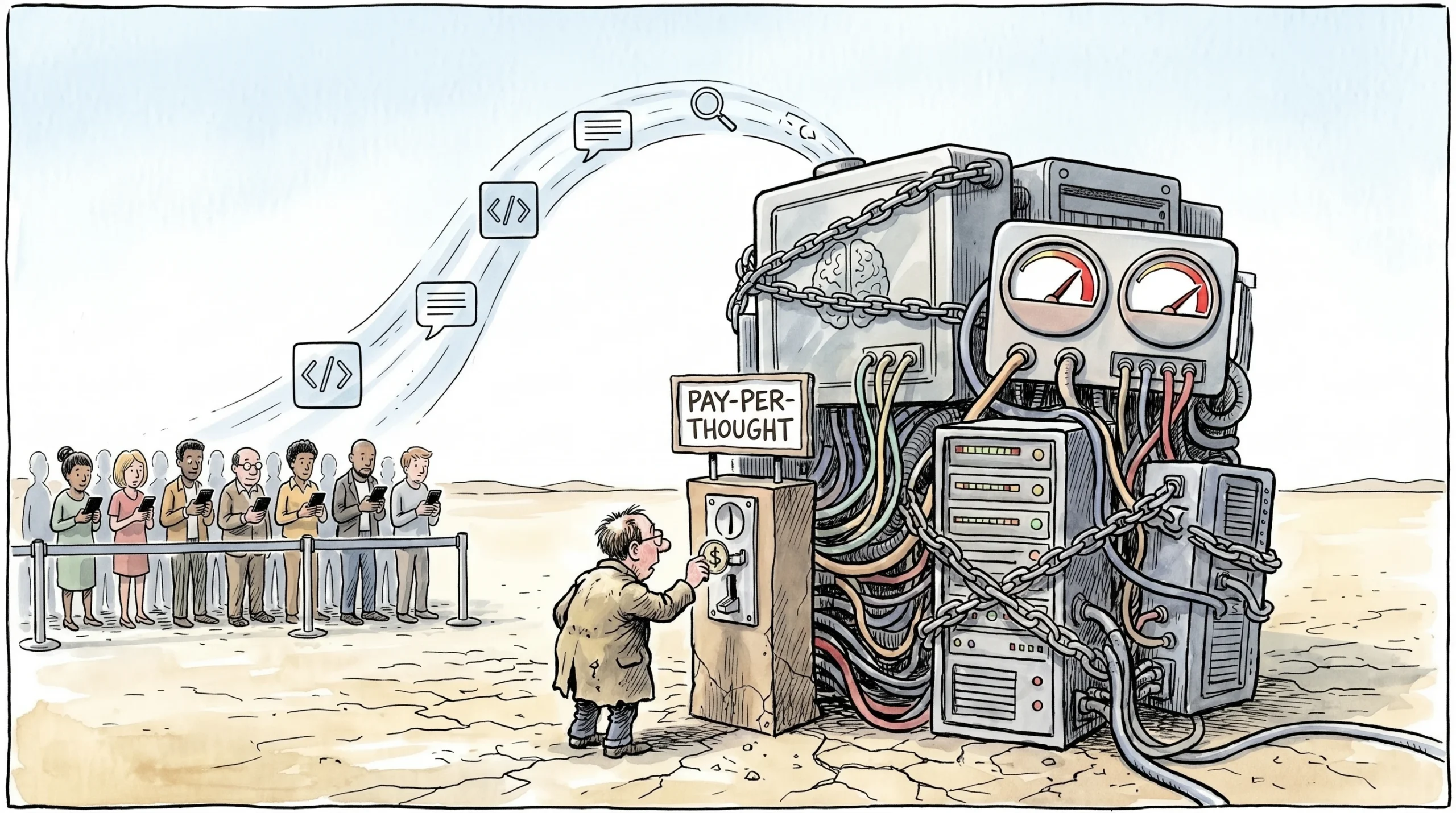
But that’s all free. So who’s paying for AI?
Me, apparently, and not too many more of us.
On 30 September, a16z put out its State of Markets report. Admittedly, this is US households with a paid AI subscription, so, if anything, I’d suggest that if you took this worldwide, it would be an even smaller percentage of the population.
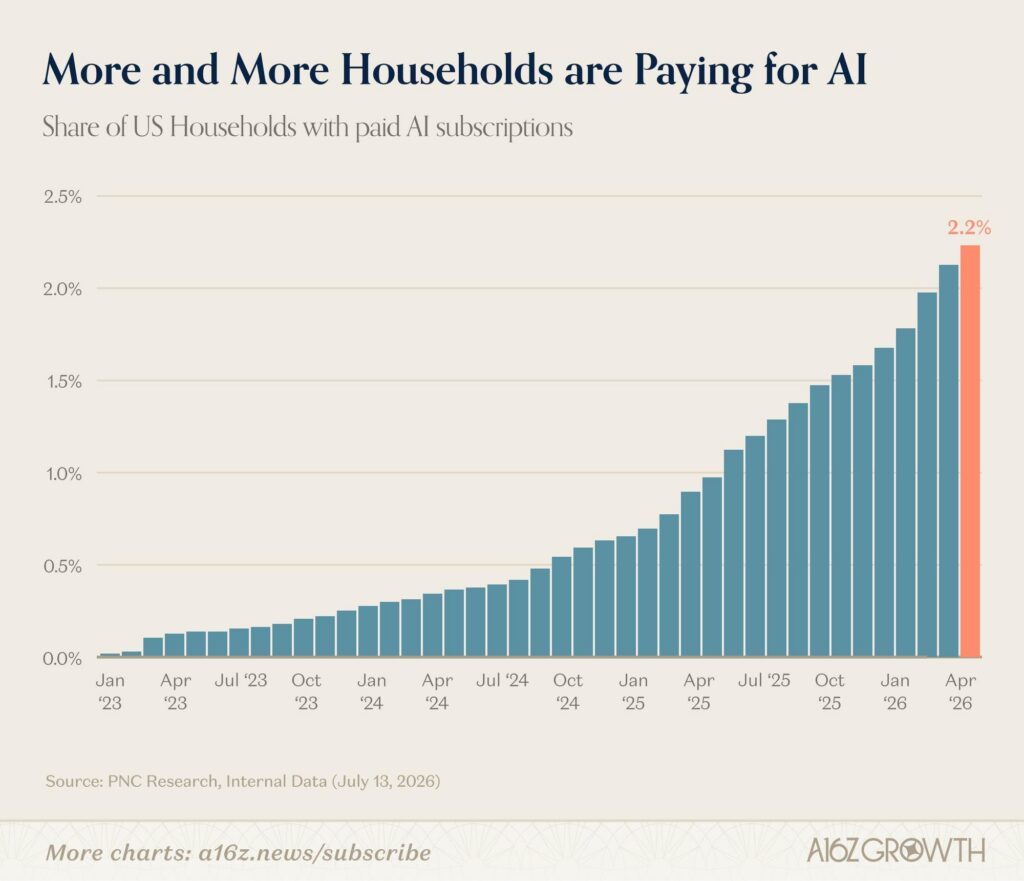
By April this year, the percentage had reached 2.2%.
Two homes in every 100.
The a16z team said, “Adoption is broad, but for the most part, it’s relatively shallow.”
Plenty more people touch AI than pay for it. Pew found in February that 49% of US adults use chatbots, and 60% read the AI summaries at the top of their search results.
My mate at the basketball is in the 60%. He’s a long way from the 2%.
So does that make this a bubble, or are we early?
Sold out at two in 100
I think this is more aligned with something like the number of people with smartphones and mobile plans.
Ofcom says 2008 was the year the smartphone took off in Britain, when 17% owned one. A decade later, by 2018 it was 78%.
I say we’re early.
When the iPhone launched in 2007, roughly what percentage of the world was already online?
|
Now put that in context with the already crazy demand and supply imbalance for the hardware.
Samsung, SK Hynix, and Micron have sold all the DRAM and high-bandwidth memory (HBM) they’ll make in 2027 and most of 2028.
SK Group chairman Chey Tae-won expects demand for AI chips to rise by 60% to 100% next year.
Even old chips are in demand, with Nvidia showing that chips like its H100 are not just holding residual value two or three years down the track, but even increasing in value, such is the demand for them and lack of supply.
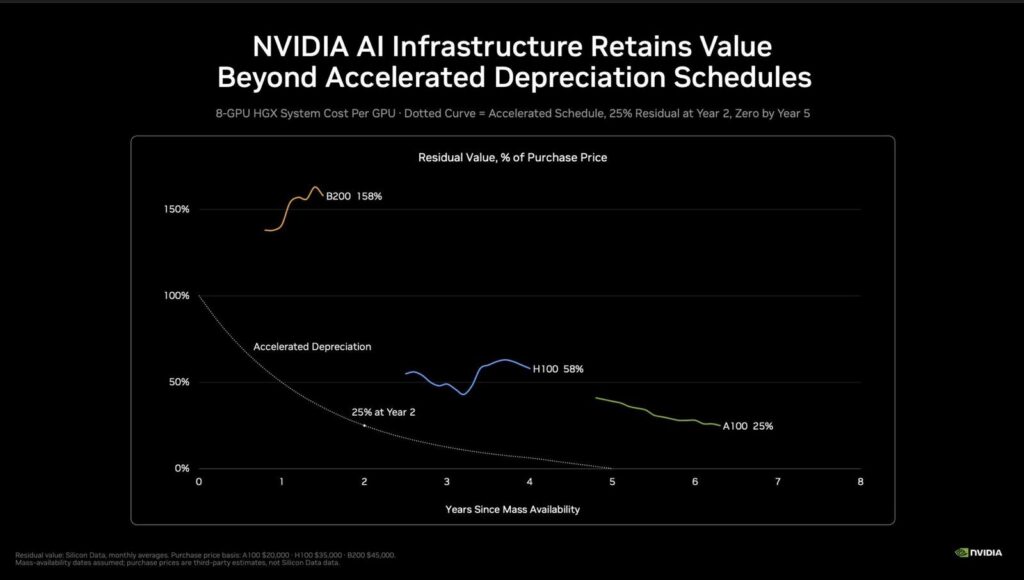
All that with two homes in 100 paying.
When the real demand curve arrives for AI, when people realise that making a game is as easy as getting your imagination into words, when people realise that a US$$ 100-a-month AI subscription is arguably worth more than any private tutor, what do you think demand does next?
And do you think supply will, or can, match it?
I say we’re early. Very early. And that the AI trade is still the best investment idea for decades to come.
Until next time,

Sam Volkering
Investment Director, Southbank Investment Research
PS AI might be the investment story I think could run for decades. But it’s not the only potentially enormous opportunity I’m watching right now. There’s another developing much closer to home – an estimated oil find under British territory that could be bigger than every North Sea field combined. I’ve named the one company I think is best placed to profit if I’m right. Read my full case here.