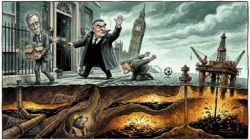
The real battle between Britain and Argentina isn't being fought on the football pitch. It's being fought over one of the world's most overlooked oil opportunities.
China landed a rocket booster, robots became more human, and Big Tech kept pouring billions into AI. Sam explains why the real investment story is happening far from Westminster.
Bill Ackman took a question in Omaha that half my readers have asked me in one form or another: Will AI make the human investor obsolete? His answer, and the numbers behind it, give ordinary UK investors an edge most professionals would kill for.
Tuchel’s lot are through to the last eight, the economy just went backwards, the government is running dual Prime Ministers, and somewhere a Wetherspoon’s is about to have the summer of its life.
A reader asked what to do if the next tech crash arrives. Looking back at the dot-com bust and 2022, Sam explains where money really flows during a sell-off—and why the FTSE's "boring" businesses often come out on top.
Apple's reported move to Intel is the latest sign that every tech giant wants its own AI chip. But Nvidia's growth isn't slowing. Here's where the next opportunities may be hiding.
The next phase of the AI boom may not be about building better models. It may be about controlling the infrastructure they run on. As governments move to keep AI development closer to home, a group of smaller "neocloud" operators could find themselves at the centre of a rapidly emerging sovereign AI race.
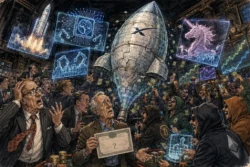
The biggest IPO in history delivered exactly the kind of frenzy investors expected. SpaceX surged on debut, retail demand smashed records, and Elon Musk became the world's first trillionaire. But with losses mounting and a flood of future selling still ahead, Sam explains why he believes the stock could trade significantly lower before becoming a compelling long-term investment.
SpaceX is expected to list on 12 June at a valuation of around $1.75 trillion. Here's why I'm passing on day one, and what investors should know before applying for shares.
For two years, AI investment has flowed almost entirely into data centres. Nvidia's new AI PC suggests that may be about to change. If AI moves onto our laptops and desktops, a whole new group of suppliers could benefit.
Most people think AI is software. Jensen Huang's latest presentation revealed the truth: AI is a vast physical infrastructure buildout involving millions of components, enormous energy demand, and hundreds of companies supplying the parts. For investors, that's where the real opportunity lies.
Everyone's talking about SpaceX's $2 trillion valuation. Almost nobody understands how a mega IPO actually works. Here's where the money comes from, who gets the shares, and why the biggest gains often go elsewhere.
Tony Blair is back in the political conversation, and his latest essay has reignited debate over Labour, Net Zero, immigration, and Britain's future. We unpack what it means for Starmer, the economy, and UK investors.
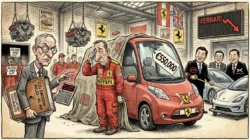
Ferrari’s bizarre new EV is more than just an ugly car. It’s a warning sign for the entire European auto industry, as Net Zero rules, regulation, and Chinese competition begin reshaping the future of global manufacturing.
Nvidia’s latest earnings may have completely shattered the AI bubble narrative. Sam Volkering breaks down why AI infrastructure demand is still accelerating, how Nvidia could reach $10 trillion, and why even a $20 trillion SpaceX no longer sounds impossible.
Crypto traders called the Cerebras IPO days before Wall Street did. Now a new “IPOP” market is pricing SpaceX at $2.5 trillion, and raising serious questions about who really controls price discovery anymore.